
“You’re pre-diabetic.”
Those were the words my doctor said during a routine checkup shortly after I turned 50 — and they stopped me cold.
My weight had crept up to the edge of obesity. My blood pressure and cholesterol were too high. And suddenly I realized something I hadn’t fully admitted to myself before: the path I was on wasn’t where I wanted to end up.
Like a lot of people, I thought I was eating normally. I avoided obvious junk food and tried to pay attention to nutrition labels. But like most busy adults, I also relied heavily on prepared foods from the grocery store — foods I assumed weren’t that bad for me.
That appointment forced me to ask a question I had never really asked before:
What exactly was I eating every day?
The deeper I looked, the more surprising the answer became.That discovery didn’t just change the way I eat — it eventually led me to start a food company called rootberry.
The problem with ultraprocessed food
The more I learned, the more I realized how much of the modern food environment revolves around what researchers call ultraprocessed foods (UPFs).
They’re designed for efficiency and consistency, not health and wellbeing. And they’re everywhere.
A growing body of research is now linking diets high in ultra-processed foods with higher rates of obesity, type 2 diabetes, heart disease and other chronic health conditions.
For me, this wasn’t an academic discussion. I had just been told my own health was heading in the wrong direction.
So I decided to make some changes.
Rediscovering real food
Instead of chasing the latest diet trend, I started focusing on something much simpler: real food made from real ingredients.
Foods that people around the world have been cooking and enjoying for centuries.
And something interesting happened.Not only did I begin to feel better physically — I discovered something else: how much great food I was missing.
Inspired by global culinary traditions
A pot of curried lentils simmering with garlic, ginger, onions and spices fills a kitchen with a rich, comforting aroma. Gojuchang-glazed sweet potatoes caramelizing in the oven. Fluffy quinoa and brown rice steaming on the stovetop. These aren’t “health foods” — they are deeply satisfying foods that also happen to be incredibly healthful.
But there is still a challenge. Cooking meals like this regularly takes time, and busy schedules often push us back toward convenient but highly processed foods.
That tension — wanting real, wholesome, delicious food but needing convenience — eventually led to rootberry.
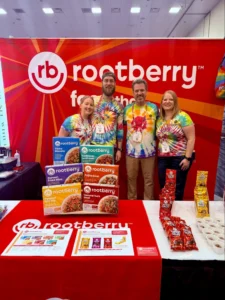
All rootberry's foods focus on ingredients naturally rich in fiber, plant protein and essential nutrients that support sustained energy and fullness. Our frozen meals draw inspiration from global flavors that are built around highly nutritional ingredients.
Our goal is to make those foods easy to enjoy in everyday life.
Why non-GMO and non-UPF food matters
For decades, convenience food has often meant highly processed food.
But that doesn’t have to be the future.
To build the food system we want, we need transparency and trust.
The evaluation processes for Non-GMO Project and Non-UPF Verified identified and categorized factors most people don’t have time to think about. Verification cuts through the confusion by simply decoding complicated labels to make better choices easier.
That’s what I needed (and still need) today.
It’s all connected
At rootberry, we believe everyone’s health journey is unique. Food is at the center of wellness and if it doesn’t taste good, nothing else matters.
We can love food that loves us back.
And that’s the idea behind rootberry.
This guest post was provided by Marc Connor, founder of rootberry, a St. Louis–based food company creating nutritionally balanced frozen meals and refrigerated energy bites designed to deliver protein, fiber and sustained energy while prioritizing non-GMO ingredients, minimal processing and little to no added sugar. Follow rootberry on social media and find products in a store near you.